Slipped Disc Treatment Without Surgery: Can It Really Heal?

Table of Contents
Slipped disc treatment without surgery? Yes, a slipped disc can often improve without surgery. Many patients recover with physiotherapy, prescribed medicines, gentle exercise, and lifestyle changes. Symptoms often begin improving within 4-6 weeks, although complete recovery may take longer. Surgery is generally considered when pain persists despite appropriate treatment or serious nerve-related symptoms develop.
If you have persistent back pain, leg pain, or numbness, understanding your treatment options can help you make informed decisions.
What Is a Slipped Disc?
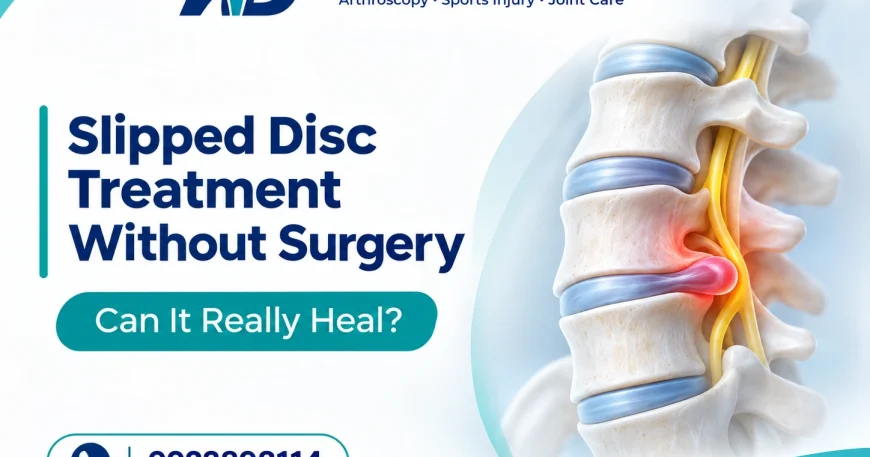
A slipped disc, also called a herniated disc, occurs when the soft inner part of a spinal disc pushes through its outer covering.
When this material irritates or compresses nearby nerves, it can cause:
- Lower back or neck pain
- Pain spreading into the leg or arm
- Tingling or numbness
- Muscle weakness
- Difficulty sitting or walking comfortably
However, not every slipped disc causes symptoms, and back pain can have several other causes.
Can a Slipped Disc Heal Without Surgery?
Yes. Most symptomatic slipped discs improve with non-surgical treatment. Over time, inflammation around the affected nerve may reduce, and the body may naturally absorb some of the herniated disc material.
Recovery depends on the severity of nerve irritation, duration of symptoms, and overall health.
A proper orthopedic examination helps determine whether conservative treatment is appropriate.
What Are the Best Slipped Disc Treatments Without Surgery?
1. Physiotherapy
Physiotherapy can help reduce discomfort, improve flexibility, and strengthen the muscles supporting your spine.
Treatment may include:
- Gentle stretching and mobility exercises
- Core strengthening
- Posture and movement guidance
- Gradual return to daily activities
Exercises should be selected according to your symptoms and professional assessment.
2. Medicines for Pain Relief
Doctors may recommend short-term pain-relieving or anti-inflammatory medicines when appropriate.
These medicines help manage symptoms but do not directly repair the affected disc.
Avoid taking medication regularly without medical advice.
3. Walking and Gentle Activity
Complete bed rest is generally not recommended for uncomplicated slipped disc symptoms.
Short walks, changing positions regularly, and gradually increasing activity can support recovery.
Avoid movements that significantly worsen pain.
4. Heat or Cold Therapy
Heat packs may relieve muscle tightness, while cold packs can temporarily reduce discomfort during painful episodes.
Always protect your skin with a towel and avoid excessive temperatures.
5. Epidural Steroid Injections
For selected patients with persistent nerve-related leg pain, a specialist may consider an epidural steroid injection.
It may provide temporary relief by reducing inflammation but does not repair the disc itself.
How Long Does a Slipped Disc Take to Heal Without Surgery?
Recovery varies depending on symptoms and nerve involvement.
| Time | Possible improvement |
|---|---|
| 1–2 weeks | Pain management and gentle movement |
| 2–6 weeks | Many patients notice reduced pain |
| 6–12 weeks | Further improvement in mobility and daily activities |
| 3 months or longer | Some patients continue recovering or require further evaluation |
These timelines are general estimates, not guaranteed recovery periods.
What Should You Avoid With a Slipped Disc?
During recovery, you may need to temporarily limit:
- Heavy lifting
- Repeated bending and twisting
- Prolonged sitting
- High-impact activities that increase pain
- Exercises that worsen leg pain or numbness
Gradually resume activities as your symptoms improve and your healthcare professional advises.
When Does a Slipped Disc Need Surgery?
Surgery may be considered when:
- Severe pain continues despite appropriate treatment.
- Muscle weakness develops or worsens.
- Nerve compression significantly affects daily activities.
- Clinical examination and imaging suggest surgery may help.
Seek emergency care immediately if you experience loss of bladder or bowel control, difficulty passing urine, numbness around the groin or buttocks, or rapidly worsening leg weakness.
These symptoms may indicate serious nerve compression.
Where Can You Get Slipped Disc Treatment in Pune?
Persistent back pain or leg symptoms deserve a proper medical assessment.
Patients in Baner, Wakad, Aundh, Balewadi, and nearby Pune areas experiencing persistent back pain or slipped disc symptoms can explore available orthopedic care and treatment options for proper diagnosis and personalized medical guidance.
An examination can help identify whether symptoms are related to a slipped disc and whether physiotherapy, medication, imaging, or further specialist evaluation is necessary.
Why Is an Orthopedic Examination Important?
Not all back pain is caused by a slipped disc. Muscle strain, spinal joint problems, and other conditions can produce similar symptoms.
Dr. Ashwin Deshmukh is an orthopedic surgeon in Baner, Pune. A clinical evaluation can help identify the possible cause of pain and guide the next treatment step.
Frequently Asked Questions
1. Can physiotherapy cure a slipped disc?
Physiotherapy can improve pain, mobility, and muscle strength, but it does not physically push the disc back into position.
2. Is walking good for a slipped disc?
Gentle walking is usually beneficial when it does not significantly worsen symptoms.
3. Can a slipped disc heal completely?
Many people recover well without surgery, although disc changes may remain visible on an MRI.
4. Is an MRI necessary for every slipped disc?
No. MRI is usually considered when symptoms persist, serious neurological signs appear, or imaging is needed for treatment decisions.
5. Can slipped disc pain return after recovery?
Yes. Symptoms can recur. Regular exercise, appropriate strengthening, and safer lifting habits may help reduce future problems.
Conclusion
Slipped disc treatment without surgery is effective for many patients. Physiotherapy, suitable medication, gentle exercise, and activity modification can support recovery.
However, persistent pain, numbness, or weakness should not be ignored.
If you are experiencing back pain or symptoms spreading into your legs, you can contact Dr. Ashwin Deshmukh’s clinic in Baner, Pune to enquire about an orthopedic consultation.