How to Correct Bow Legs in Babies: Causes and Treatment

Table of Contents
How to Correct Bow Legs in Babies? Bow legs in babies usually correct naturally as they grow, without special shoes, braces or exercises. In most infants, the outward curve of the legs is a normal part of development and gradually improves by around 2–3 years of age. However, severe bowing, unequal leg alignment or bowing that continues beyond the expected age may require an orthopedic evaluation. Understanding why bow legs occur and when treatment is necessary can help parents make informed decisions about their baby’s bone health.
What Are Bow Legs in Babies?
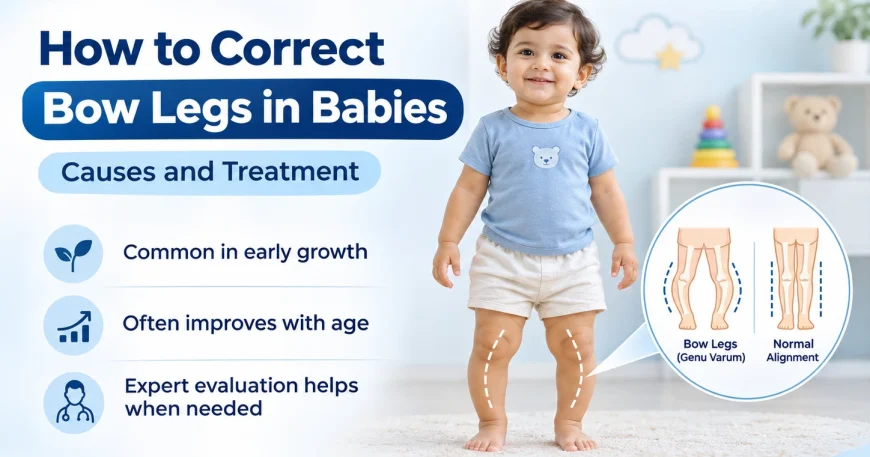
Bow legs, medically known as genu varum, describe a condition in which the legs curve outward when the child stands with their feet together. The knees remain separated, creating a curved appearance.
This is commonly observed in newborns because of their position inside the womb. As babies grow, their bones gradually change alignment, and the outward curve usually becomes less noticeable.
What Causes Bow Legs in Babies?
Several factors can contribute to bow legs in infants.
1. Normal Development
Most babies are born with some outward curvature of their legs. This is called physiological bowing and is generally part of normal development. The legs usually begin straightening during the second year and become straighter by approximately three years of age.
2. Vitamin D Deficiency
Vitamin D helps the body absorb calcium, which supports healthy bone development. Severe vitamin D deficiency can lead to rickets, a condition that may cause bowing of the legs and other bone abnormalities.
3. Blount’s Disease
Blount’s disease is a growth disorder affecting the upper part of the shinbone near the knee. It can cause progressive bowing, particularly as a child begins walking. Early evaluation helps determine whether treatment is required.
How to Correct Bow Legs in Babies?
Treatment depends on whether the bowing is part of normal development or caused by an underlying condition.
1. Allow Natural Growth
Most babies with physiological bowing do not need treatment. Their leg alignment gradually improves as they grow. Regular pediatric check-ups help monitor development.
2. Maintain Healthy Nutrition
Adequate calcium and vitamin D are important for bone development. Parents should discuss their baby’s nutritional requirements and vitamin D supplementation with a pediatrician.
If a deficiency is identified, appropriate treatment may help improve bone health. Avoid giving high-dose supplements without medical advice.
3. Avoid Unnecessary Braces and Corrective Shoes
Special shoes, leg straps and braces are generally not recommended for normal developmental bow legs because they do not speed up natural correction.
Bracing may be considered for certain diagnosed conditions, such as early Blount’s disease, under orthopedic supervision.
4. Seek Orthopedic Evaluation When Necessary
If the bowing is severe, unequal between the legs or progressively increasing, an orthopedic examination can help identify the cause.
Depending on the diagnosis, treatment may involve observation, nutritional correction, bracing or surgery in selected cases.
At What Age Do Bow Legs Straighten?
The following developmental pattern is commonly observed:
| Age | Typical Development |
|---|---|
| Birth | Bowing is commonly present |
| 6–12 months | Curvature may appear noticeable |
| 18–24 months | Legs generally begin becoming straighter |
| 2–3 years | Bowing usually resolves in most children |
These are general developmental ranges, and every child grows differently.
If the bowing continues beyond approximately three years or becomes more pronounced, medical evaluation is advisable.
When Should Parents Worry About Bow Legs?
Although bow legs are commonly normal in infancy, certain signs should not be ignored.
Consult a pediatrician or orthopedic doctor if:
- One leg appears more bowed than the other.
- The curvature is severe or progressively increasing.
- Bowing persists beyond approximately three years.
- Your child develops pain or discomfort.
- The child limps or has difficulty walking.
- There are concerns about growth or height.
Early assessment can help identify conditions such as Blount’s disease or rickets when treatment may be beneficial.
Can Exercises Correct Bow Legs in Babies?
Normal developmental bow legs do not require corrective exercises. Crawling, standing and walking according to the baby’s developmental readiness are part of normal growth.
Parents should not force the baby’s legs into a straight position, apply pressure to the knees or attempt stretching techniques to change bone alignment.
If an underlying condition is diagnosed, the doctor can explain whether physiotherapy or another treatment has a role. Understanding different bone and joint conditions is an important part of orthopedic care and treatment for children, helping parents make informed decisions about their child’s development.
Is Surgery Required for Bow Legs?
Surgery is rarely necessary for normal developmental bowing.
For children with conditions such as Blount’s disease or significant bone deformities, treatment depends on the severity, age and stage of the condition. Some children may benefit from bracing, while surgical correction may be considered in selected cases.
The decision should always follow an orthopedic assessment.
How Are Bow Legs Diagnosed?
An orthopedic doctor generally evaluates the child’s leg alignment, growth pattern and developmental history.
The examination may include:
- Assessing whether both legs are equally bowed.
- Reviewing the child’s walking pattern.
- Evaluating growth and height.
- Checking for signs of bone-related problems.
X-rays are not routinely required for every infant. They may be recommended when bowing is unusual, progressive or persists beyond the expected developmental age.
Orthopedic Consultation for Bow Legs in Babies
Most babies with bow legs do not require treatment, and their legs gradually straighten as they grow. However, persistent, severe or unequal bowing should be evaluated by an orthopedic doctor. Parents looking for reliable information about their child’s orthopedic care can also understand how the clinic approaches different bone and joint conditions and the importance of appropriate medical assessment.
Frequently Asked Questions
Are bow legs normal in newborn babies?
Yes. Bow legs are commonly seen in newborns because of their position inside the womb. In most children, the curvature gradually improves as they grow.
Can bow legs in babies be corrected naturally?
Yes. Physiological bow legs generally correct naturally without special shoes, braces or exercises, usually by around two to three years of age.
Does vitamin D deficiency cause bow legs?
Vitamin D deficiency can lead to rickets, which may cause bowing of the legs. However, not every baby with bow legs has vitamin D deficiency.
When should I consult an orthopedic doctor?
Consult an orthopedic doctor if bowing is severe, unequal between the legs, progressively worsening, associated with pain or difficulty walking, or persists beyond approximately three years.
Is surgery necessary for bow legs in children?
Most children with physiological bow legs do not need surgery. Surgical treatment is considered only in selected cases involving significant deformity or specific underlying conditions.
Conclusion
Bow legs in babies are usually a normal part of development and gradually improve as children grow. While most infants do not require treatment, persistent, severe or unequal bowing should not be ignored. Understanding the cause and seeking timely medical guidance can help parents make informed decisions about their child’s bone health.
If you have concerns about your baby’s leg alignment or development, you can get in touch with the doctor to discuss your concerns and arrange an orthopedic consultation when needed.